

 Translate
News
SADC TFCA Peer-to-Peer Learning Exchange on Human-Wildlife Conflict & Corridor Management in KAZA
26 November 2026
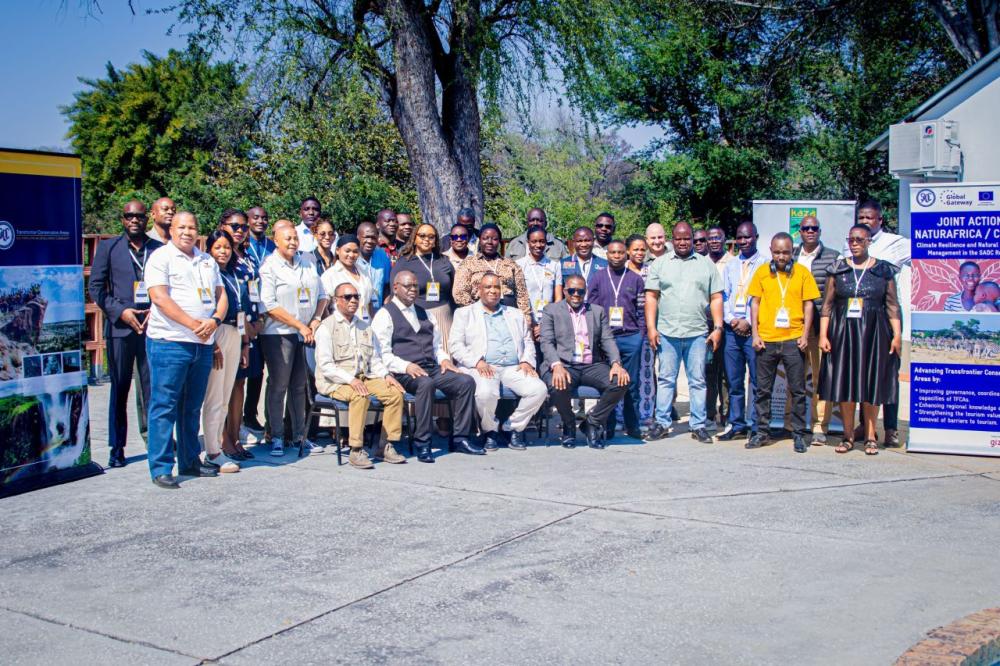
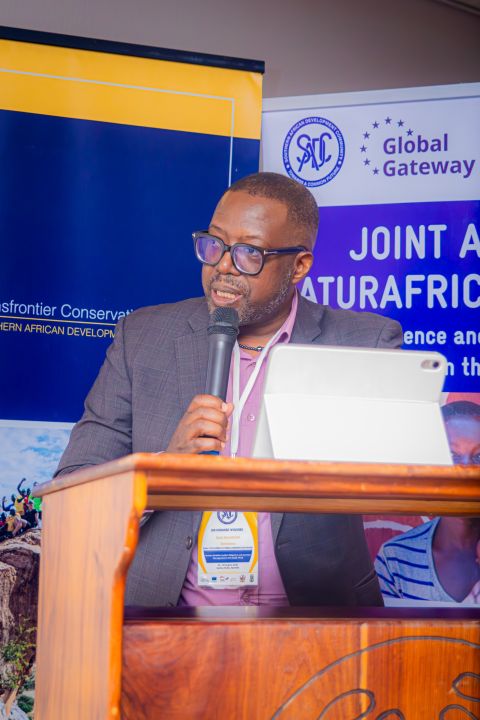
The SADC Transfrontier Conservation Area (TFCA) Peer-to-Peer Learning Exchange on Human-Wildlife Conflict and Corridor Management brought together practitioners from across the Southern African Development Community (SADC) region for five days of knowledge sharing, collaboration and field-based learning in Katima Mulilo, Namibia.
Hosted within the Kavango Zambezi (KAZA) TFCA, the regional exchange provided a platform for practitioners working across different TFCA landscapes to share experiences, examine practical interventions and explore approaches to strengthening human-wildlife coexistence while maintaining ecological connectivity across shared landscapes.
The exchange focused on the realities of managing human-wildlife interactions in communities living alongside wildlife, recognising that effective conservation requires approaches that safeguard biodiversity while addressing the livelihoods, safety and development needs of local communities.
Learning across borders for stronger coexistence
As one of Southern Africa’s most significant conservation challenges, human-wildlife conflict requires coordinated responses that consider both ecological and socio-economic realities. Increasing pressure on land and natural resources, habitat fragmentation and the movement of wildlife across human-dominated landscapes make effective conflict mitigation and corridor management essential to the long-term sustainability of TFCAs.
Through facilitated discussions and peer-to-peer exchanges, participants shared experiences from their respective landscapes, highlighting practical approaches to conflict prevention, community engagement, ecological connectivity and wildlife corridor governance.
The exchange also provided an opportunity to examine how successful interventions in one landscape could be adapted to others, taking into account differences in ecological conditions, community structures, land tenure systems and institutional arrangements.
From discussion to the field: Learning from communities living alongside wildlife
A central feature of the exchange was the opportunity to move beyond technical discussions and engage directly with communities and practitioners implementing human-wildlife coexistence initiatives on the ground.
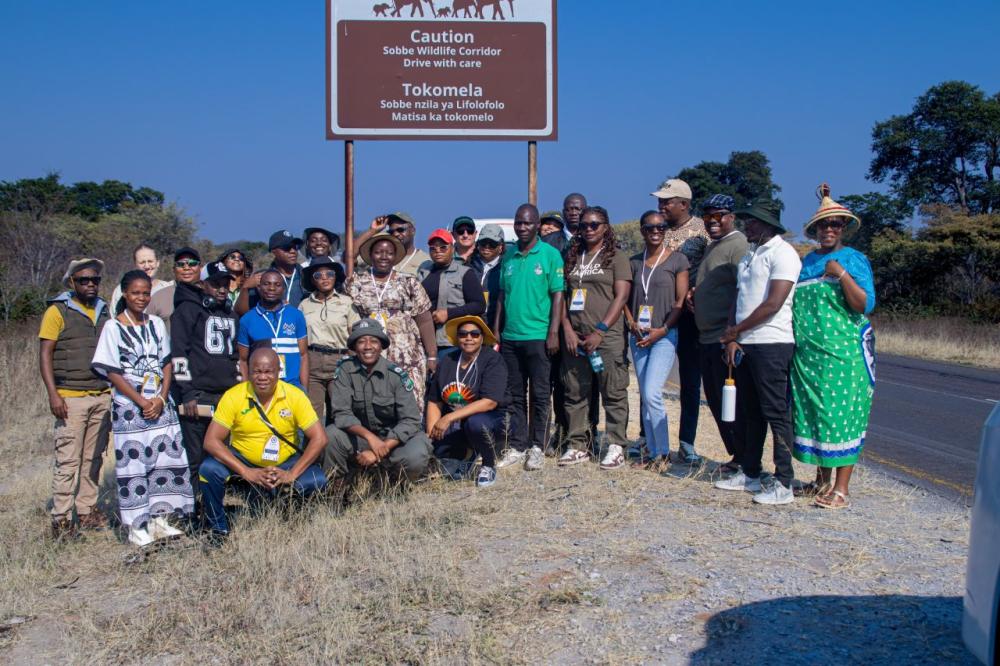
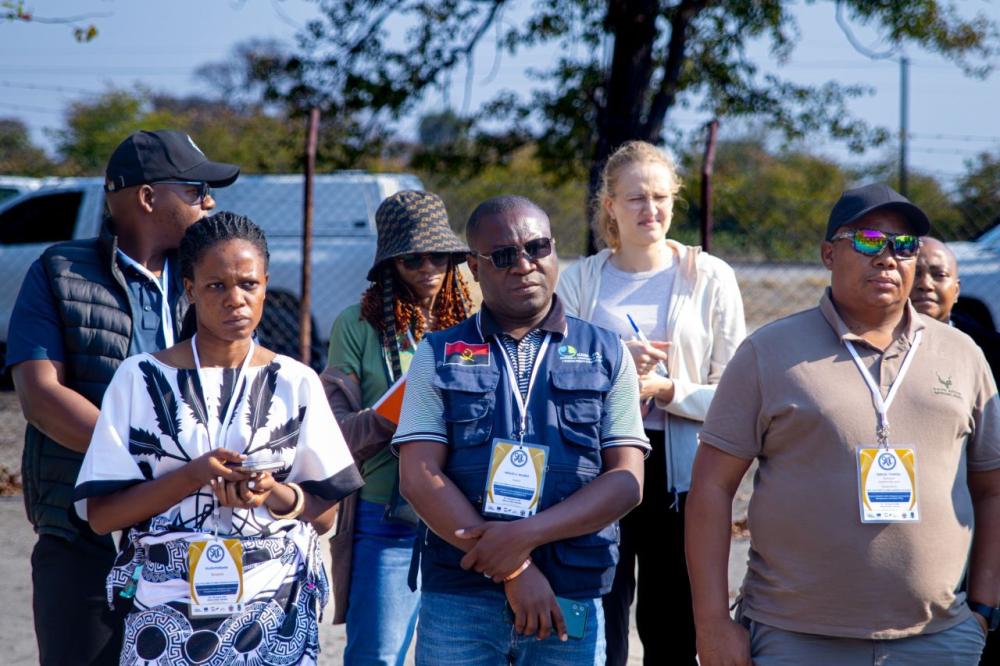
Field visits to Sobbe Conservancy and Kwando State Forest and Conservancy in Namibia’s Zambezi Region provided participants with first-hand insights into the experiences of communities living alongside wildlife. Through engagements with community members and farmers, participants explored local coping strategies, the challenges associated with wildlife movement and the role of community-led initiatives in reducing human-wildlife conflict.
Discussions also highlighted the important role of Traditional Authorities in corridor governance, customary land management and conflict resolution. Their involvement is particularly important in landscapes where wildlife corridors intersect with communal land and areas used for agriculture, livestock production and other livelihood activities.
In Namushasha village, participants examined practical interventions designed to reduce conflict and protect community livelihoods, including predator-proof kraals and community-based early warning systems. These initiatives provided an opportunity to reflect on the effectiveness, sustainability and potential for replication of locally appropriate mitigation measures across other TFCA landscapes.
The field engagements reinforced an important lesson: sustainable human-wildlife coexistence cannot be achieved through technical interventions alone. It requires meaningful community participation, recognition of local knowledge, inclusive governance structures and solutions that respond to the realities of people living alongside wildlife.
Connecting conservation, livelihoods and community governance
Beyond human-wildlife conflict mitigation, the exchange explored the broader relationship between conservation, sustainable livelihoods and community resource management.
Participants shared experiences and lessons relating to corridor governance, community forests and sustainable fisheries, highlighting the importance of integrated approaches to natural resource management. These discussions recognised that communities are not merely recipients of conservation interventions but essential partners and custodians of the landscapes in which wildlife and people coexist.
The exchange further emphasised the importance of strengthening local institutions and governance systems to support the management of connected landscapes. Collaboration between communities, Traditional Authorities, conservation organisations and government institutions remains critical to ensuring that wildlife corridors are maintained while respecting local land-use priorities and livelihood needs.
By bringing together practitioners from different TFCAs, the exchange created opportunities to identify common challenges, share context-specific solutions and strengthen relationships between institutions working towards similar conservation objectives across the region.
Marking Namibia’s Heroes’ Day through a shared commitment to conservation
The exchange also coincided with Namibia’s Heroes’ Day commemoration. In solidarity with the people of Namibia, representatives from the participating TFCAs marked the occasion through a tree-planting activity.
The symbolic gesture represented a shared commitment to conservation, ecological restoration and the protection of Southern Africa’s natural heritage for future generations. It also reflected the spirit of regional solidarity underpinning the SADC TFCA Programme, recognising that the protection of biodiversity and the sustainable management of natural resources are shared responsibilities that extend beyond national borders.
From shared learning to shared action
As the five-day exchange concluded in Katima Mulilo, participants consolidated key lessons, recommendations and opportunities for strengthening human-wildlife coexistence and corridor management across the SADC region.
A key outcome was the commitment to sustain collaboration beyond the exchange, including the establishment of a Community of Practice on Human-Wildlife Coexistence. This platform is envisaged as an opportunity for continued knowledge exchange, experience sharing and collaboration among practitioners working across the region's TFCA landscapes.
The commitment reflects the recognition that peer-to-peer learning is most valuable when knowledge gained translates into practical action. By maintaining connections between practitioners, the Community of Practice can help facilitate the exchange of tested approaches, support adaptive management and strengthen the application of lessons across different landscapes.
Ultimately, the exchange demonstrated the value of regional cooperation in addressing shared conservation challenges. While the circumstances of individual TFCAs may differ, the experiences shared in Namibia highlighted common priorities: strengthening community participation, improving corridor governance, supporting sustainable livelihoods and developing practical solutions that enable people and wildlife to coexist.
Through continued collaboration and knowledge sharing, the SADC TFCA Network will contribute to more connected landscapes, resilient communities and effective conservation across Southern Africa.
With support by the German Government and the European Union, which is implemented by Deutsche Gesellschaft für Internationale Zusammenarbeit (GIZ) GmbH, the exchange contributes to stronger regional cooperation, connected landscapes and more effective human-wildlife coexistence across Southern Africa.
We thank the SADC Secretariat, KAZA Secretariat and Namibia’s Ministry of Environment, Forestry and Tourism for their collaboration in making this regional learning exchange possible.